
An automotive ceramic coating fails to prevent deep scratch marks and rock chips because it is designed as a microscopic, sacrificial liquid polymer layer that shields paint from chemical and environmental damage, not kinetic impacts. While it cures to a high level of hardness to resist minor swirl marks, it lacks the physical thickness and elasticity required to absorb the energy of flying road debris or heavy, abrasive friction. To achieve true defense against physical impacts, vehicle owners must combine a liquid coating with a physical paint protection film.
The Microscopic Reality of Liquid Polymer Protection
To understand why ceramic coatings fail against high-speed stones or deep scratches, you have to look at the physics of the cured layer. When professionally applied, a liquid coating chemically bonds with your vehicle’s factory clear coat, filling microscopic pores to create a flat, hydrophobic barrier.
However, this barrier is only two to three microns thick compared to a sheet of paper at one hundred microns. Because it has virtually no mechanical mass, it cannot compress or absorb kinetic energy when a rock strikes your hood while driving. The concentrated force completely bypasses the microscopic, rigid layer, fracturing the clear coat underneath to leave a visible chip. While investing in a professional ceramic coating in Charlotte provides incredible defense against environmental fading and chemical etching, it lacks the physical mass required to deflect mechanical impacts.
Hardness Scales Versus Impact Resistance
A common point of confusion among automotive enthusiasts stems from the marketing of “9H hardness.” Many assume this rating refers to the Mohs hardness scale, where a diamond is a ten and a topaz is a nine. In reality, automotive coatings are tested on the pencil hardness scale. A 9H rating simply means that the cured coating can resist scratching from a standard 9H drafting pencil, which is the hardest technical pencil available.
Comparing Mechanical vs. Chemical Protection
To better understand what your vehicle is actually up against on the road, it helps to look at how different protective layers respond to environmental and physical hazards:
| Protective Feature | Ceramic Coatings (Liquid Polymer) | Paint Protection Film (Urethane Clear Bra) |
| Average Thickness | 2 to 3 Microns | 8 Mils (approx. 200 Microns) |
| Primary Material | Silicon Dioxide / Titanium Dioxide | Elastomeric Polyurethane |
| Rock Chip Defense | Minimal (Rigid structure shears) | High (Absorbs and deflects impact) |
| Deep Scratch Resistance | Low (Bypasses the micro-layer) | High (Features self-healing properties) |
| UV & Chemical Shielding | Exceptional (Chemical bond) | Excellent (Physical barrier) |
| Hydrophobic Slickness | Extreme (Fills surface pores) | Moderate (Can be enhanced with a coating top layer) |
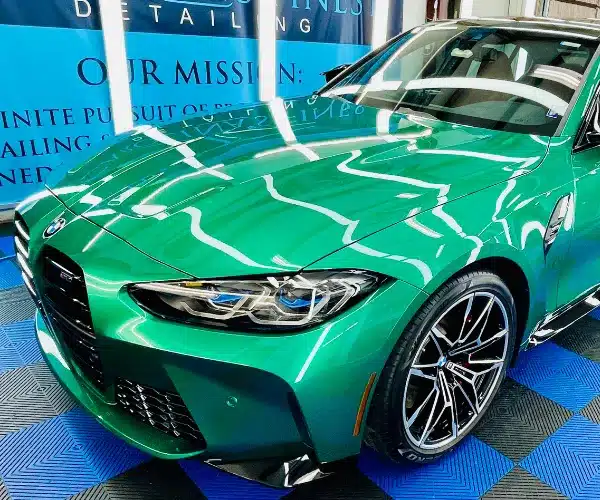
While boosting clear coat hardness from a factory level of 3H up to 9H dramatically upgrades washing safety, it does not create armor. This increased hardness makes the surface slicker and highly resistant to the microscopic abrasions caused by improper hand washing or automated tunnels. However, local owners researching premium options for a ceramic coating in Charlotte, NC quickly discover that while rigidity stops fine swirl marks, it cannot prevent heavy, concentrated pressure from tearing right through to the paint.
The Essential Role of Film for Physical Defense
For absolute defense against physical damage, vehicle owners must look beyond chemical barriers to mechanical protection. This is where paint protection film (PPF), or clear bra, becomes necessary.
Unlike thin liquid coatings, PPF is a thick, multi-layered urethane barrier with elastomeric properties that allow it to stretch, flex, and absorb kinetic energy. When road debris strikes, the film distributes the impact across a wider surface area to keep the rock from fracturing the paint, while its self-healing top coat uses ambient heat to erase minor scuffs.
The most comprehensive preservation strategy for daily driving around Indian Trail involves a hybrid approach:
- High-Impact Zones: Apply physical film to the front bumper, hood, fenders, and mirrors to absorb mechanical road debris impacts.
- Remaining Panels: Install a liquid polymer coating across the rest of the vehicle to secure deep gloss and environmental protection.
- The Ultimate Combination: Apply the liquid coating over the film itself, combining the impact absorption of urethane with the extreme water-beading properties of ceramic technology.
Our Framework for Vehicle Preservation
Long-lasting surface protection demands a systematic approach rooted in professional execution. We manage every installation with a dedicated methodology centered around expert craftsmanship and certified excellence. Our team treats each vehicle as our own, meticulously inspecting and preparing every panel before application.
This process relies heavily on our commitment to utilizing quality materials and advanced, industry-leading techniques to guarantee outstanding performance and superior results. Built entirely around customer-centric service, our seamless and hassle-free car care experience is designed to exceed expectations, leaving you with a deep sense of pride in a vehicle maintained by professionals who genuinely care about the details.
How to Prepare and Decontaminate Paint for Proper Bonding
A successful installation relies on the preparation beneath the coating. Applying product to an unleveled, contaminated surface causes premature bond failure and a dull finish. We build an enduring foundation through this precise sequence:
- Chemical Decontamination: An intensive wash using iron-remover shampoos to dissolve embedded brake and industrial dust.
- Mechanical Clay Treatment: A professional clay bar gently lifts remaining bonded contaminants, ensuring a smooth surface critical for vehicles in high-traffic or industrial areas.
- Paint Correction: Precision dual-action polishers level the clear coat, removing all swirl marks and light scratches before they are permanently locked under the magnifying effect of the coating.
- IPA Wipe Down: An isopropyl alcohol panel prep removes lingering polishing oils, leaving a naked clear coat interface for an absolute polymer bond.
How to Maximize the Longevity of Your Investment
Once your vehicle features a professionally installed coating, maintaining that pristine finish requires a shift in how you wash and care for the exterior. While the hydrophobic properties make cleaning dramatically faster, the surface is not completely self-cleaning.
Follow this maintenance protocol to keep your protective barrier performing perfectly:
- Implement a Two-Bucket Wash Method: Use one bucket for your clean, pH-neutral ceramic maintenance shampoo and a second bucket filled with pure water exclusively for rinsing your microfiber wash mitt after touching each panel. This prevents dirt particles from being dragged back across the paint finish.
- Avoid Mechanical Car Washes: Steer clear of automated tunnel washes that use coarse nylon brushes or highly alkaline detergents, as these will inflict heavy physical wear and degrade the coating prematurely.
- Use Premium Microfiber for Drying: Never use traditional cotton towels or chamois. Dry the vehicle using an ultra-plush, high-GSM microfiber drying towel or a touchless forced-air blower to completely eliminate friction.
People Also Ask
Will a ceramic coating protect my car from shopping cart dings? No. Ceramic layers lack the physical mass and thickness to absorb the mechanical force required to protect metal or plastic panels from dents and dings.
Can you buff out a scratch on a ceramic coated car? Superficial scuffs within the coating can often be polished out. If the scratch penetrates the factory clear coat, the area must be professionally leveled and the ceramic protection reapplied.
Does ceramic coating stop love bugs from ruining paint? Yes. While it does not prevent physical impacts, the slick, hydrophobic barrier prevents acidic insect fluids from etching into your clear coat and makes removal during routine washing much easier.
Elevate Your Vehicle’s Defense
Your vehicle is a significant investment and a source of personal pride. Leaving its appearance to chance against harsh environmental elements can lead to premature aging and diminished value. At Carolina’s Finest Detailing, we provide tailored protection packages designed to match your specific driving habits and expectations.
For discerning drivers who want their vehicle to look its absolute best, securing a high-caliber Charlotte ceramic coating is the ultimate way to lock in deep reflections and continuous environmental defense. We invite car enthusiasts and meticulous owners seeking a reliable partner to discover a higher standard of care. Let our team deliver the precision, clarity, and enduring shine your vehicle deserves.
Take the next step toward absolute paint preservation by scheduling an appointment for your exterior protection upgrade. Contact us today!