
Yes, professional paint correction can remove light to moderate surface scratches, swirl marks, etching, and oxidation without repainting your vehicle, provided the damage has not penetrated completely through the clear coat into the base coat or primer. Because clear coat acts as a transparent protective layer measured in microns, technicians can level out microscopic peaks and valleys in that top layer to restore optical clarity and gloss. Deep scratches that catch a fingernail or expose underlying color or metal require touch-up work or repainting rather than polishing alone.
How Automotive Paint Layers Determine What Can Be Fixed
Modern automotive finishes are built in three distinct layers: primer, base coat (which provides pigment), and clear coat (a transparent urethane or acrylic top layer). Understanding this structure explains why some blemishes disappear under a polishing pad while others remain visible.
When light hits a smooth, intact clear coat, it reflects evenly off the surface, creating depth and shine. When microscopic grooves, spiderweb swirl marks, or fine scuffs form in the clear coat, light scatters in different directions, making the paint look dull or scratched. Paint correction works by gently abrading away a minuscule fraction of the clear coat, often just a few microns, until the surface sits level with the deepest part of the defect.
Once a scratch cuts through the clear coat into the color coat or primer, leveling the surrounding clear coat cannot replace missing pigment. In those cases, a technician can soften harsh edges so the scratch draws less attention from a distance, yet full color restoration requires paint touch-up or refinishing.
Scratches Paint Correction Can Remove vs. Scratches That Need Repainting
A fingernail test helps separate polishing candidates from body-shop repairs: if you run a clean fingernail lightly across the blemish and it does not catch, the scratch is confined to the clear coat. If your nail snags or you see a white, gray, or bare metal line beneath the color layer, polishing alone will not erase it.
| Defect or Scratch Type | Typical Layer Affected | Can Paint Correction Remove It? | What to Expect |
| Swirl marks and spiderwebbing | Clear coat | Yes | Restores deep reflection and clarity |
| Light brush or towel scuffs | Clear coat | Yes | Usually removed in one to two polishing stages |
| Water spot etching and mild oxidation | Clear coat | Yes (unless severely pitted) | Clears haze and revives color richness |
| Deep key or shopping-cart gouges | Base coat, primer, or metal | No (only edge softening) | Needs touch-up or repainting for full repair |
| Stone chips exposing primer/metal | Primer or bare metal | No | Requires filling and spot/panel refinishing |
Even within clear-coat defects, severity matters. Heavy oxidation from sun exposure or automated car-wash marring may require multi-stage compounding and polishing, while factory clear coat thickness sets the safe limit on how aggressively any panel can be leveled. Measuring paint depth before starting preserves factory protection rather than thinning a panel too far.
What Happens During Professional Paint Correction
Proper paint correction follows a controlled, multi-step sequence tailored to each panel rather than running a rotary buffer over the entire car with heavy compound.
- Decontamination and Inspection: The vehicle receives a thorough wash and chemical/mechanical decontamination to strip road grime, tar, and embedded iron particles. Technicians then inspect the paint under high-CRI lighting and use a paint depth gauge to check clear coat thickness.
- Test Spot Calibration: Because every paint system reacts differently, softer Japanese clears behave differently from harder German or domestic clears; a test spot identifies the least aggressive pad and polish combination that removes defects cleanly.
- Compounding and Polishing: Cutting compounds level heavier clear-coat defects, while finer finishing polishes refine the surface to remove micro-hazing and maximize gloss.
- Final Surface Prep and Protection: Panel wipe-downs remove polishing oils so true results are visible, followed by a sealant or ceramic coating to lock in the finish and simplify future washing.
During a recent paint inspection for a commuter sedan in Wesley Chapel, NC, automatic wash swirls and light driveway brush marks covered the hood and doors, yet paint gauge readings confirmed plenty of healthy clear coat remained. Two-stage machine polishing cleared the haze and erased the fine scratches without touching a spray gun.
Our Proprietary Approach to Car Care
At Carolina’s Finest Detailing, we structure every paint restoration around six core service standards designed to protect your vehicle’s factory finish:
- Expert Craftsmanship: Every correction starts with paint-depth diagnostics, test spots, and controlled machine work matched to your specific clear-coat hardness. Rather than rushing through panels, we remove defects cleanly while leaving a safe clear coat behind for long-term durability.
- Certified Excellence: Ongoing technical training, current industry education, and disciplined inspection protocols keep our methods reliable across classic finishes, daily drivers, and modern performance vehicles.
- Customer-Centric Service: Direct communication, honest assessments of what polishing can and cannot fix, and scheduling built around your routine keep your goals at the center of the job.
- Quality Materials: We use proven compounds, polishes, pads, and protective coatings engineered for clean cut, high optical clarity, and lasting protection rather than temporary fillers that wash away after a few rains.
- Outstanding Performance and Superior Results: Pairing the right pad-and-polish chemistry with measured technique produces crisp reflections, rich color depth, and finishes that hold up in direct sunlight.
- Ensuring a Seamless and Hassle-Free Car Care Experience: From straightforward appointment booking to practical maintenance advice after pickup, we keep the process organized and predictable without guesswork.
Vehicle owners researching paint correction in Wesley Chapel, NC often reach out after trying store-bought waxes that only mask swirls temporarily. When we worked on a family SUV near Matthews, NC, with light branch scrapes along the passenger side, targeted spot compounding and finishing polish removed the clear-coat marks while keeping the factory paint intact.
Why Factory Paint Preservation Matters
Keeping original factory paint whenever possible protects both appearance and vehicle value. OEM finishes are applied in controlled factory booths with baked curing processes that aftermarket repainting rarely matches identically across adjacent panels.
Preserving original paint also avoids unnecessary insurance claims, Carfax repair entries, and body-shop downtime. When local drivers look into paint correction in Wesley Chapel, their goal is typically to eliminate frustrating swirl marks and light scratches without turning a surface-level cosmetic issue into a costly refinishing job.
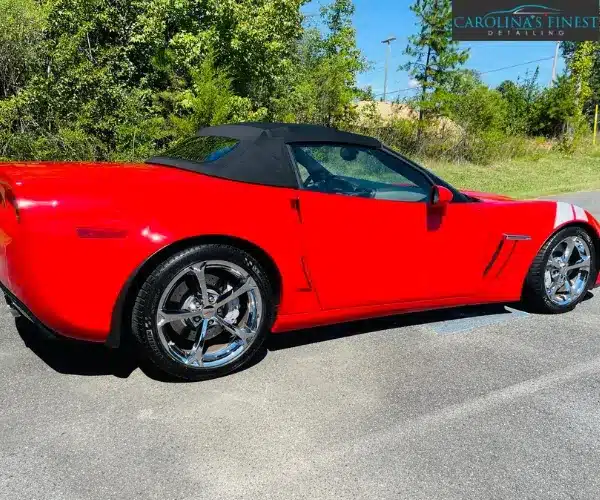
For a weekend sports car owner preparing for a local meetup, targeted paint correction in Wesley Chapel removed years of light microfiber marring and restored sharp body lines. Similarly, when restoring a daily driver in Matthews, NC, dulled by automatic tunnel washes, controlled clear-coat leveling brought back deep gloss without repainting a single panel.
People Also Ask
How long does paint correction last once scratches are removed?
Because paint correction permanently levels out clear-coat imperfections rather than filling them, removed scratches and swirl marks do not return unless new damage occurs. How long does the smooth finish stay sharp depends on ongoing wash habits and protection; hand washing with clean microfiber mitts and applying a ceramic coating or sealant helps maintain clarity for years.
Is paint correction safe for my car’s clear coat?
Yes, when performed by trained technicians who measure paint thickness, run a test spot first, and select the least aggressive pad and polish needed for the defect. Clear coat can safely undergo controlled leveling within measured limits, whereas high-heat buffing or overly coarse abrasives can thin clear coat prematurely.
Can paint correction fix deep scratches down to the primer or metal?
No, paint correction cannot fully remove deep scratches that penetrate through the clear coat into the base coat, primer, or bare metal. A detailer can round off sharp scratch edges to make the line less noticeable, but restoring missing pigment requires touch-up paint or body-shop refinishing.
How much does paint correction usually cost compared to repainting?
Paint correction costs a fraction of repainting a panel or full vehicle while addressing multi-panel swirls, oxidation, and light scratches in a single service. Final pricing depends on vehicle size, clear-coat condition, and whether the paint requires a single-stage enhancement or multi-stage correction.
Ready to restore clarity and gloss to your daily driver, weekend cruiser, or family vehicle? At Carolina’s Finest Detailing, we treat every vehicle like our own, combining honest evaluations, proven techniques, and careful attention to detail. Contact us today to book your appointment and give your car the finish it deserves.