
Paint correction removes oxidation, water spots, and clear coat imperfections by using machine polishers, specialized abrasive compounds, and calibrated foam or microfiber pads to safely level a microscopic layer of damaged clear coat. By mechanically abrading and refining the outermost surface down to the lowest depth of the defect, the process restores optical clarity, eliminates light-scattering scratches, and reveals the true depth and gloss of the factory paint underneath.
The Science Behind Clear Coat Imperfections
Modern automotive paint consists of three distinct layers: a primer bonded to the panel, a pigmented base coat for color, and a transparent polyurethane clear coat on top. Measuring between 1.5 and 2.5 mils, roughly half the thickness of a standard sheet of copy paper, this clear coat acts as the primary barrier against ultraviolet radiation, road debris, acidic contaminants, and wash-induced friction.
When paint looks dull, hazy, or covered in spiderwebbing under direct sunlight, the color coat underneath is rarely damaged. Instead, the clear coat has developed microscopic peaks and valleys. Light hitting a level surface reflects uniformly back to your eye, creating a deep, mirror-like shine. Light hitting a scratched, oxidized, or etched clear coat scatters in thousands of directions, which you see as swirl marks, faded color, or chalky haze.
How Oxidation Degrades Paint
Prolonged UV exposure and oxygen break down clear coat polymers, turning the surface chalky and faded. Waxes only mask the damage temporarily; true removal requires abrading away the dead layer to expose a healthy clear coat.
Why Hard Water Spots Etch Into the Surface
Evaporating water leaves behind mineral deposits that the sun bakes into the warm polyurethane, creating chemical craters. While washing removes surface crust, it leaves behind a recessed ring that requires machine leveling to erase.
Swirl Marks, RIDS, and Wash Marring
Circular swirl marks stem from improper washing and drying tools. Deeper linear scratches (Random Isolated Deeper Scratches, or RIDS) demand careful paint depth measurements before polishing to keep the protective UV barrier intact.
Step-by-Step: How the Paint Correction Process Works
True paint correction is a controlled subtraction process rather than a quick buff-and-shine. During a recent project on a dark metallic SUV brought in for paint correction in Matthews, NC, our technicians measured paint depths across every panel before touching a polisher, identifying thin factory clear coats along the upper body lines that required a customized pad-and-polish combination.
1. Thorough Decontamination and Paint Depth Assessment
Before a machine pad touches the clear coat, every bonded contaminant must be stripped away so the polisher does not drag iron particles or road tar across the finish.
- Chemical Decontamination: Iron removers dissolve embedded brake dust and industrial fallout, turning purple as they neutralize ferrous particles.
- Mechanical Clay Bar Treatment: A fine-grade detailing clay with dedicated lubrication shears off tree sap, overspray, and stubborn grime, leaving the surface glass-smooth.
- Ultrasonic Paint Depth Gauging: Technicians take multiple readings per panel in microns to map out clear coat thickness and flag areas that were previously repainted or thinned.
2. Heavy Compounding (Defect Leveling)
For vehicles suffering from heavy oxidation, deep water spot etching, or severe swirl marks, the first machine stage pairs a heavier cutting compound with a dense microfiber or wool pad on a dual-action or rotary polisher. Controlled friction and diminishing abrasives gently level the clear coat down to the base of the imperfections.
3. Refining and Finishing Polish
Heavy compounding removes deep defects, but aggressive abrasives leave behind microscopic haze. The refining stage switches to an ultra-fine finishing polish and a soft foam pad, jeweling the clear coat to remove compounding haze, maximize optical clarity, and bring out rich color depth.
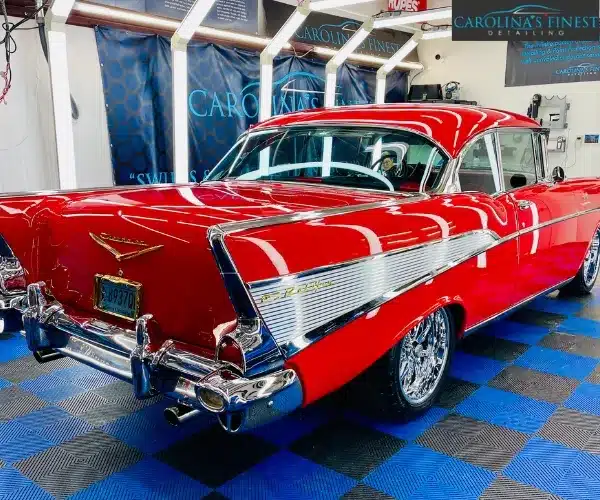
4. Panel Wipe and Long-Term Protection
Polishing oils are stripped away using an isopropyl alcohol (IPA) panel prep solution so technicians can inspect the true, uncorrected finish under high-CRI lights. Once verified defect-free, the freshly leveled clear coat is sealed with a ceramic coating, paint sealant, or high-grade wax to block future UV oxidation and mineral etching.
Comparing Paint Correction Stages
Different vehicles require different levels of correction depending on clear coat hardness, defect severity, and ownership goals. Whether a driver is scheduling Matthews paint correction for a daily commuter or commissioning a multi-stage restoration on a weekend sports car, matching the tier to the paint condition prevents unnecessary clear coat removal.
| Correction Tier | Best For | Defects Removed | Typical Timeframe |
| Gloss Enhancement (1-Step) | Newer vehicles with light wash marring or minor dullness | 50%–65% of light swirls and mild oxidation | 4–6 hours |
| Two-Stage Correction | Daily drivers with moderate swirls, water spots, and visible haze | 80%–90% of swirls, etching, and surface oxidation | 1–2 days |
| Multi-Stage / Wet Sanding | Show cars, neglected classics, and severe clear coat damage | 90%–95%+ of defects, heavy orange peel, and deep RIDS | 2–4+ days |
The Carolina’s Finest Detailing Standard: Our Proprietary Approach
Achieving a swirl-free finish without compromising the long-term health of factory clear coat takes far more than an off-the-shelf buffer. Whether a client visits us from Indian Land after noticing stubborn mineral rings on their hood or books paint correction in Matthews to erase years of wash marring, every vehicle goes through a disciplined methodology built around precision and accountability:
- Expert Craftsmanship: Our technicians are trained in paint chemistry, clear coat metallurgy, and machine dynamics. We never rush pad speeds or overheat panels, ensuring uniform defect removal from edge to edge without burning through delicate body lines.
- Certified Excellence: We adhere to strict industry standards and ongoing technical training, using ultrasonic paint gauges and calibrated multi-spectrum lighting to verify every square inch of clear coat before a vehicle leaves our bay.
- Customer-Centric Service: Every vehicle and driver has different needs. We inspect your paint alongside you under diagnostic lights, give honest assessments on deep rock chips versus correctable clear coat defects, and tailor the correction package to how you actually drive and maintain your car.
- Quality Materials: We strictly use body-shop-safe, silicone-free diminishing abrasives, medical-grade microfiber towels, and German-engineered foam and microfiber pads that permanently level defects rather than hiding scratches behind temporary fillers or glazes.
- Outstanding Performance and Superior Results: By matching pad firmness and abrasive cut to your vehicle’s exact clear coat hardness, from soft Japanese finishes to rock-hard German ceramic clear coats, we consistently deliver distortion-free reflections and measurable gloss gains.
- Seamless and Hassle-Free Car Care Experience: From transparent upfront quotes and clear turnaround timelines to hands-on post-correction wash guidance, we eliminate guesswork so you drive away feeling genuine pride and confidence in how your vehicle looks.
People Also Ask
Does paint correction permanently remove scratches and swirl marks?
Yes. Unlike waxes or glazes that temporarily fill scratches and wash away after a few rainstorms, paint correction permanently removes defects by leveling the surrounding clear coat. New swirl marks can still form if the vehicle is washed improperly afterward.
How much clear coat is removed during paint correction?
A typical two-stage paint correction removes roughly 1 to 3 microns of clear coat, less than the thickness of a single strand of spider silk. Measuring paint thickness beforehand guarantees that plenty of UV-blocking clear coat remains intact for the life of the vehicle.
Can paint correction fix scratches that catch my fingernail?
If a scratch is deep enough to catch your fingernail, it has penetrated through the clear coat and into the base color coat or primer. Paint correction can round off the sharp edges of the scratch to make it less visible in direct sunlight, though full repair requires touch-up paint or panel refinishing.
How long does paint correction last?
The correction itself is permanent because the leveled clear coat will never revert to its scratched state. How long the finish stays swirl-free depends on maintenance, pairing the service with a ceramic coating and using proper two-bucket hand-washing techniques preserves the clarity for years.
Should I get a ceramic coating after paint correction?
Yes, applying a ceramic coating immediately after paint correction is the most effective way to protect the leveled surface. Because the clear coat is completely free of oxidation, water spots, and polishing oils, the ceramic coating bonds directly to the paint and shields it against future UV damage and mineral etching.
Restore Your Vehicle’s True Showroom Shine
Whether you are dealing with chalky sun-faded panels, stubborn sprinkler water spots, or years of automatic car wash swirls, Carolina’s Finest Detailing treats every vehicle as if it were our own. Drivers across Matthews, NC, and Indian Land rely on our meticulous eye for detail and proven multi-stage polishing process to bring out deep, distortion-free gloss and lasting pride of ownership.
Contact us today to review our correction packages and book your appointment.