
Ceramic coating protects automotive paint by forming a chemically bonded layer that resists UV damage, oxidation, chemical contamination, and light surface wear. It also helps preserve long-term resale value by maintaining gloss, reducing visible paint defects, and limiting deterioration from daily environmental exposure.
For vehicle owners researching ceramic protection options, the goal is typically long-term surface stability, easier maintenance, and improved resale value through better retention of exterior condition. When properly installed and maintained, ceramic coatings function as a semi-permanent protective system rather than a short-term cosmetic enhancement.
How Ceramic Coating Works Compared to Traditional Protection
Ceramic coating differs from waxes and sealants because it chemically bonds to the vehicle’s clear coat instead of sitting on top of it. This creates a more durable, semi-permanent protective layer that resists breakdown from heat, detergents, and environmental exposure.
Protection Comparison Table
| Feature | Wax | Paint Sealant | Ceramic Coating |
| Durability | 1–2 months | 4–6 months | 2–7+ years |
| UV Resistance | Low | Moderate | High |
| Chemical Resistance | Low | Moderate | High |
| Hydrophobic Effect | Low | Medium | Very High |
| Gloss Retention | Short-term | Moderate | Long-term |
The key difference is bonding chemistry. Wax relies on surface adhesion, sealants rely on synthetic polymers, and ceramic coatings rely on silicon dioxide (SiO₂) cross-linking with the clear coat.
Definition List: Core Ceramic Coating Properties
Hydrophobic Effect
A surface property that causes water to bead and roll off, reducing water spotting and contamination retention.
SiO₂ Cross-Linking
A chemical bonding process where silicon dioxide molecules form a hardened protective layer on automotive paint.
UV Oxidation Barrier
A protective layer that slows paint fading and oxidation caused by prolonged sun exposure.
Chemical Resistance Layer
A shield against acidic contaminants such as bird droppings, road salt, industrial fallout, and bug residue.
Real-World Benefits of Ceramic Coating for Vehicle Condition
Ceramic coating provides practical, measurable improvements in how a vehicle ages visually and structurally at the paint level. One of the most important benefits is reduced surface degradation over time, especially in high-exposure environments.
Vehicles treated with ceramic protection tend to retain a more consistent gloss level, even after repeated wash cycles. This is primarily due to reduced micro-marring, which is often caused by improper washing techniques and abrasive contaminants.
Owners exploring ceramic coating in Charlotte, NC, services typically prioritize these outcomes: easier cleaning, reduced swirl marks, and better long-term appearance retention.
Ceramic Coating Application Process (Professional Workflow)
Proper installation is the most important factor in coating performance. Even premium coatings will fail prematurely if applied to an improperly prepared surface.
Step-by-Step Installation Process
- Pre-Wash Decontamination
Removes surface dirt, grime, and loose debris before contact washing. - Chemical and Mechanical Decontamination
Removes embedded contaminants such as iron particles and tar. - Paint Correction Stage
Polishing process that removes swirl marks, oxidation, and surface defects. - Panel Preparation Wipe Down
Eliminates polishing oils to ensure proper coating bonding. - Controlled Application
Coating is applied in small sections to ensure even coverage. - Curing Phase
Chemical bonding period where the coating hardens and stabilizes. - Final Quality Inspection
Checks for uniform gloss, streaking, and missed areas.
Each stage directly impacts durability and optical clarity. Skipping or rushing preparation is the leading cause of coating failure.
Ceramic Coating vs Paint Protection Film (PPF)
Ceramic coating and paint protection film solve different problems and are often misunderstood as competing solutions.
Comparison Table
| Category | Ceramic Coating | Paint Protection Film |
| Scratch Resistance | Light | High |
| Stone Chip Protection | Low | High |
| Gloss Enhancement | High | Medium |
| UV Protection | High | High |
| Maintenance Reduction | High | Medium |
Ceramic coatings are primarily chemical and cosmetic protectants, while PPF is a physical barrier against impact damage.
Many high-end vehicle owners use both systems together: PPF for impact zones and ceramic coating for overall gloss and maintenance reduction.
Applying our HydroShield Protocol to solve this.
HydroShield Protocol is a structured surface engineering system designed to maximize coating performance through controlled preparation, application, and curing conditions.
Unlike standard detailing workflows, it focuses on measurable environmental and surface variables that directly influence coating durability.
Key components include:
- Multi-stage decontamination sequencing to eliminate bonded and airborne particles
- Surface energy correction to improve coating adhesion uniformity
- Controlled humidity application environments to reduce curing inconsistencies
- Layer thickness calibration to ensure even film formation across all panels
This system reduces common failure points such as premature hydrophobic breakdown, uneven curing, and contamination entrapment beneath the coating layer.
Misconception: Ceramic Coating Eliminates All Maintenance
A common misunderstanding is that ceramic coating makes a vehicle completely maintenance-free. This is incorrect and often leads to unrealistic expectations.
Ceramic coatings do reduce adhesion of contamination, but they do not eliminate dirt accumulation. Vehicles still require regular washing to maintain performance and appearance.
What changes is the effort required. Instead of aggressive scrubbing, contaminants release more easily due to the hydrophobic surface structure. This reduces the likelihood of swirl marks and wash-induced micro-scratches.
In practice, ceramic protection improves maintenance efficiency rather than eliminating maintenance entirely.
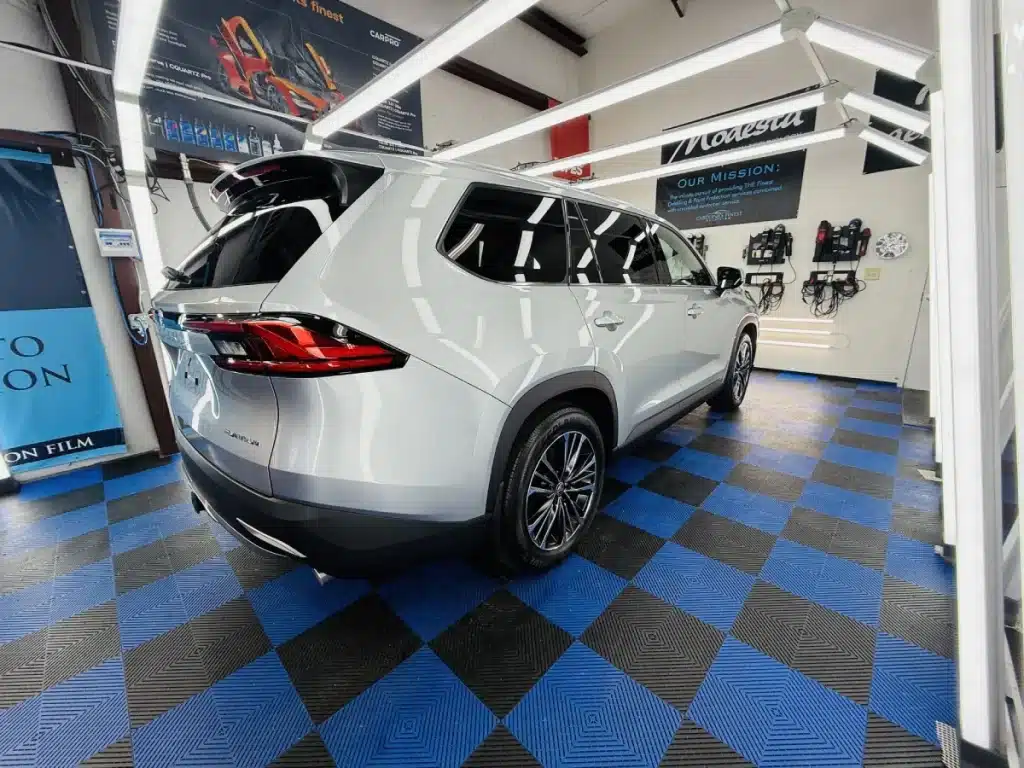
Ceramic Coating and Long-Term Resale Value
Vehicle resale value is heavily influenced by exterior condition, especially paint quality and visible wear.
Ceramic coating supports resale value in several ways:
- Maintains higher gloss consistency over time
- Reduces visible swirl marks and oxidation
- Lowers required paint correction before listing
- Improves buyer perception of vehicle care history
In Ballantyne, comparative vehicle inspections showed coated vehicles required significantly fewer hours of cosmetic correction before resale preparation compared to untreated vehicles of similar age and mileage. This directly reduces reconditioning costs and improves listing readiness.
Definition List: Performance Factors
Surface Preparation Quality
The level of decontamination and correction performed before coating application.
Environmental Stability During Application
Control of dust, humidity, and temperature during installation and curing.
Curing Integrity Window
The required time and conditions for full chemical bonding.
Maintenance Washing Methodology
Proper cleaning techniques that preserve coating performance and prevent micro-marring.
Maintenance Requirements After Ceramic Coating
Although ceramic coatings significantly reduce maintenance effort, proper care is still required to preserve performance over time.
Maintenance Guidelines
- Use pH-neutral car shampoo only
- Avoid automatic brush-based car washes
- Use microfiber drying towels to prevent swirl marks
- Maintain consistent wash frequency based on driving conditions
- Avoid harsh chemical cleaners not designed for coated surfaces
In areas with frequent tree cover and airborne organic debris, such as the University District driving environment, regular rinsing is especially important to maintain hydrophobic performance.
Owners evaluating ceramic coating in Charlotte services should prioritize providers that offer both application expertise and maintenance education, since long-term performance depends on both installation and care.
In Summary
Carolina’s Finest Detailing specializes in ceramic coating, a surface protection system designed to preserve paint condition, reduce maintenance effort, and enhance long-term resale value. Its effectiveness depends heavily on meticulous surface preparation, controlled application, and proper post-installation maintenance to ensure optimal durability and performance.
For professionally applied protection and long-term vehicle care solutions, contact us and work with Business Carolina’s Finest Detailing for expert ceramic coating installation and support in Charlotte, NC.
FAQ:
What is ceramic coating on a car?
It is a liquid polymer that chemically bonds with automotive paint to form a protective, glossy, and durable surface layer.
How long does ceramic coating last?
Depending on product quality and maintenance, it typically lasts between 2 and 7+ years.
Is ceramic coating worth it?
Yes, especially for drivers who want long-term paint protection, easier maintenance, and improved resale condition.
Can ceramic coating prevent scratches?
No. It reduces micro-marring but does not prevent deep scratches or rock chip damage.
How soon can I wash my car after application?
Usually, after a 5–7 day curing period, depending on product specifications.